
The Creative AI Foundation (CAIF) was established to explore one of the most pressing questions of our time: how artificial intelligence is shaping culture, creativity, and society itself. Based in the Greater Zurich Area, the foundation brings together perspectives from art, philosophy, and engineering — creating a platform for interdisciplinary dialogue and public engagement.
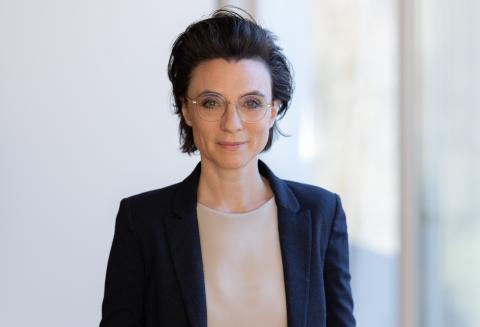
We spoke with Yuan Martschnig-Wei, CAIF’s founder and president, about the ideas behind the foundation, her decision to locate in Switzerland, and how Greater Zurich’s AI ecosystem is enabling new forms of collaboration across technology and the humanities.
What is the Creative AI Foundation?
Before we look ahead, let’s rewind. What sparked CAIF’s creation – and what space does it aim to fill at the intersection of art, tech, and society?
1. You recently established the Creative AI Foundation here in Switzerland. For readers meeting you for the first time, what is CAIF and what does it aim to achieve?
The Creative AI Foundation (CAIF) is a Swiss non-profit organization that fosters open, interdisciplinary dialogue on how AI and emerging technologies shape society. We organize talks, panels, exhibitions, and cross-sector collaborations, and are developing specialized funds to support research, education, and international cooperation.
2. What inspired the creation of CAIF – and what gap are you trying to fill?
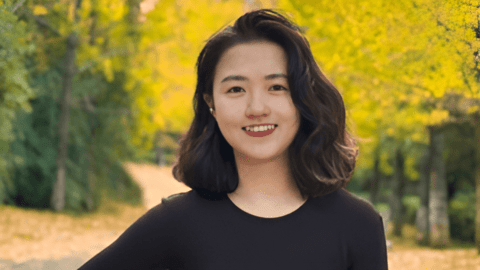
Since 2022, I’ve led my team in applying machine learning, and by 2023 I realized AI was driving a technological revolution. Initially, I considered an AI startup, but conversations with friends revealed a bigger gap: society lacks a space to explore how AI transforms humanity and culture, raising critical questions about ethics, jobs, and social impact. The Creative AI Foundation was created to fill this gap, offering an independent, interdisciplinary platform where art, science, and society can engage critically and creatively with AI.
The minds behind the mission
CAIF’s interdisciplinary approach is grounded in the diverse expertise of its leadership team, whose backgrounds span robotics, psychology, curation, and automation.
3. CAIF has a strong people-driven origin. Could you introduce yourself, the team, and share what each of you brings to this mission?
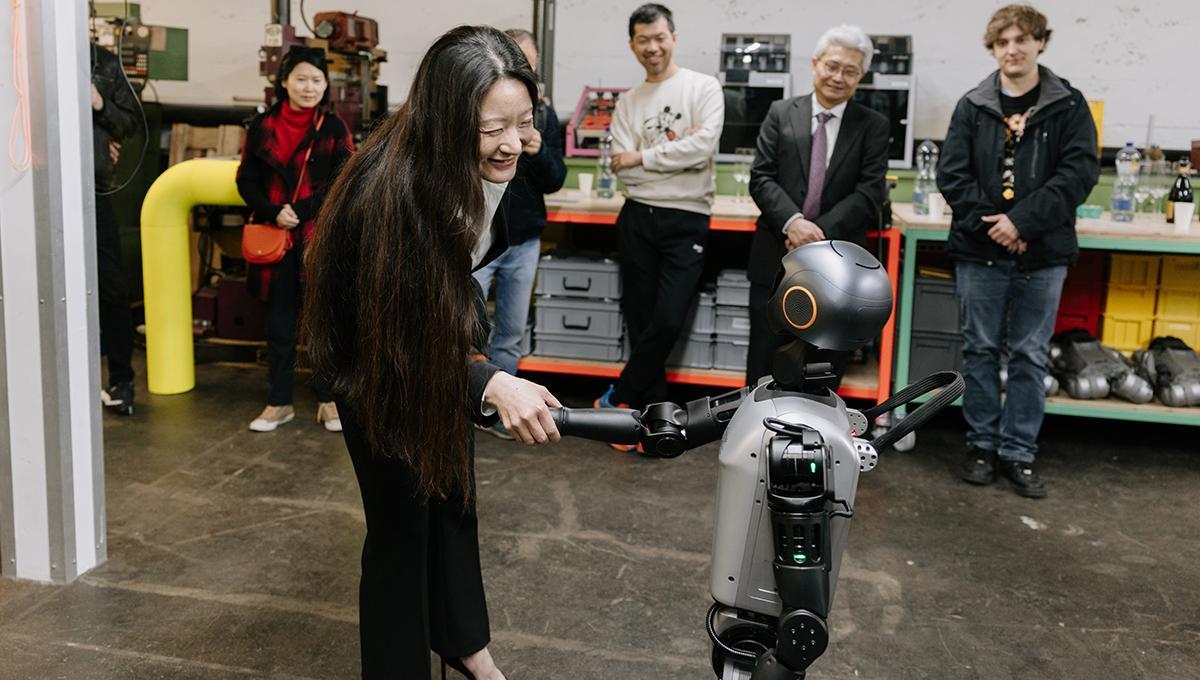
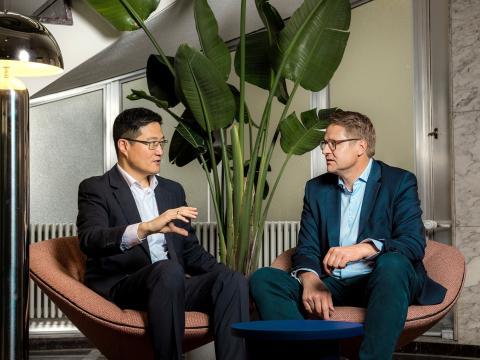
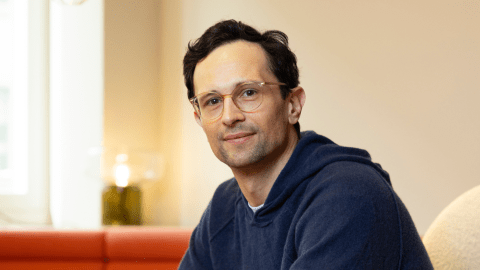
Our Vice President, Dr. Ing. Haiwen Ye, has spent 13 years at ABB, overseeing global sales of power generation automation solutions, and published several papers on AI applications in the 1990s. Ben Weinberg, Founder and CEO of Mycori AG, also serves on the board of the Zürcher Kunstgesellschaft (Kunsthaus Zürich). Adrian Christopher Notz is an independent curator and lecturer, and was formerly curator of AI+Art at the ETH AI Center. Hao Chen is the Founder and CEO of Booster Robotics in Beijing. I believe that understanding humanity and technology goes hand in hand. I studied art history, philosophy, and psychology, and have led an IT team at a consulting firm specializing in employee assistance programs for over 10 years.
Together, our team spans art, philosophy, psychology, Automation, AI and robotics, reflecting the interdisciplinary, people-driven mission of the Creative AI Foundation.
Why Switzerland and what makes Greater Zurich stand out
For CAIF, choosing Switzerland was a strategic and personal decision. From legal clarity to academic depth, Greater Zurich offers the conditions needed to build a lasting, interdisciplinary foundation.
4. Your journey has taken you from China to Germany before choosing Switzerland as your base. Looking back, what convinced you that Switzerland was the right place ?
I feel a strong connection with the Swiss mentality: friendships may take time to form, but they are enduring, and hard work and personal integrity are highly valued. Switzerland supports small and medium-sized enterprises, and I especially appreciate Greater Zurich for its international outlook and open-minded atmosphere. These experiences have convinced me that Switzerland is the right place for me both personally and professionally.

5. Switzerland and China both have strong robotics and emerging-tech communities. What differences do you see between Switzerland and China in robotics, tech, or creativity?
In humanoid robotics, both Swiss and Chinese companies aim to differentiate their designs while focusing on specific areas. In industrial robotics, Chinese firms often deliver cost-effective, function-focused solutions, while Swiss firms prioritize continuous technological innovation. China has strong hardware supply chains and a growing AI talent pool, whereas Switzerland excels in original research and sustained R&D, supported by leading institutions like ETH Zurich, University of Zurich, and EPFL.
Dicover the AI & Robotics ecosystem
Dicover the AI & Robotics ecosystem
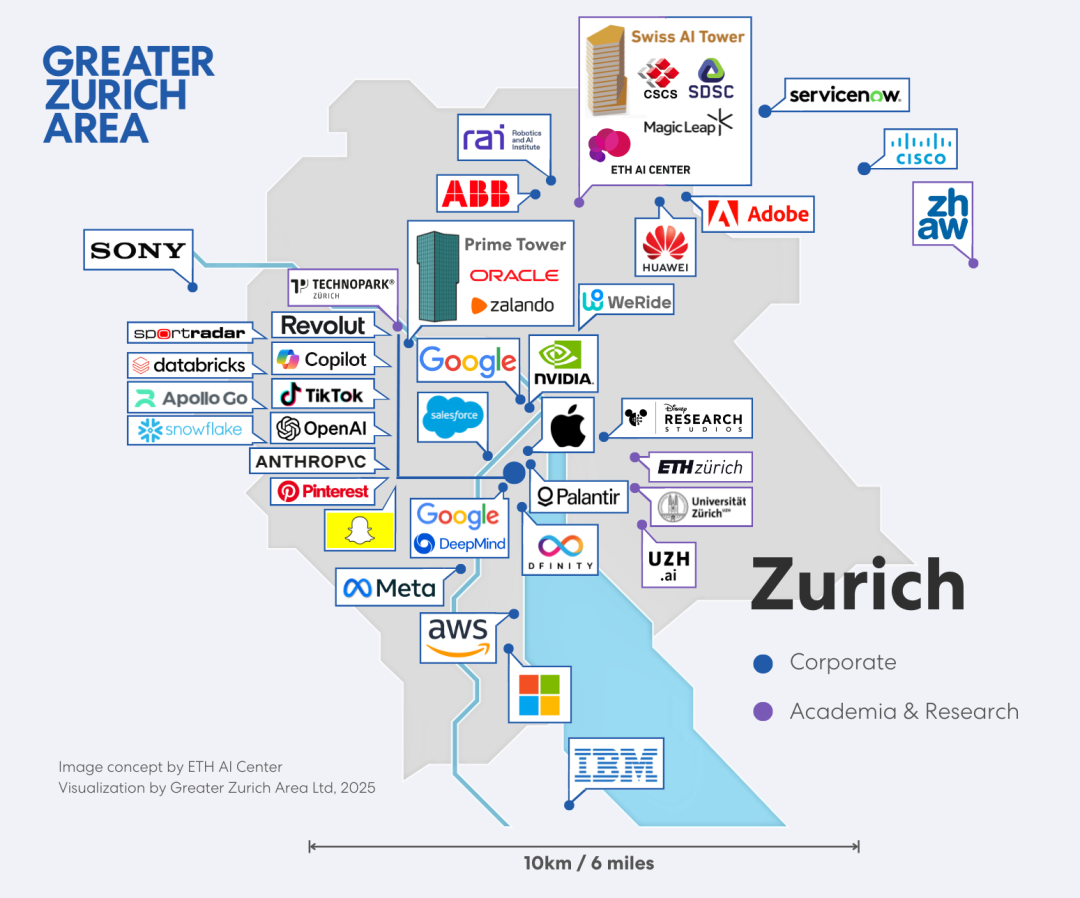
The Greater Zurich Area continues to be a global leader in robotics, drone technology, artificial intelligence, and computer vision. This has attracted leading technology firms and talent and encouraged entrepreneurship in the region, leading to unmatched opportunities for intelligent & autonomous systems companies.
6. You could have set up the Foundation anywhere. Why did Greater Zurich make the most sense for your mission?
Greater Zurich offers a uniquely compact ecosystem where global tech companies, top universities, and creative institutions sit side by side. With Google, Nvidia, ETH Zurich, and Disney Research all within walking distance, the region naturally fosters innovation. Our collaboration with AATB – pioneers in robotic art since 2016 – also showed me that Greater Zurich is already a quiet leader in creative robotics, confirming it as the right home for our mission. On a personal note, a conversation with Lan Qin from the Greater Zurich Area gave me the final confirmation that this was the ideal place to establish the Foundation.
7. The Greater Zurich Area offers a uniquely favourable legal and tax environment for charitable foundations. How did this framework influence your decision, and what does it enable for your work on a practical level?
The legal and tax framework in the Greater Zurich Area was an additional advantage for us as a non-profit foundation. The canton offers a transparent and efficient process for establishing such an organization, and the favourable tax treatment means more of our resources can go directly into our mission. While the ecosystem and interdisciplinary spirit were the main reasons we chose Greater Zurich, this supportive framework makes our work more sustainable and allows us to create greater impact in practice.
Dreaming robots and AI festivals
CAIF’s vision takes shape through public dialogue and creative expression. At the 2025 Zurich AI Festival, the Foundation hosted two sessions that invited audiences to reflect on robotics, art, and the emotional dimensions of AI.
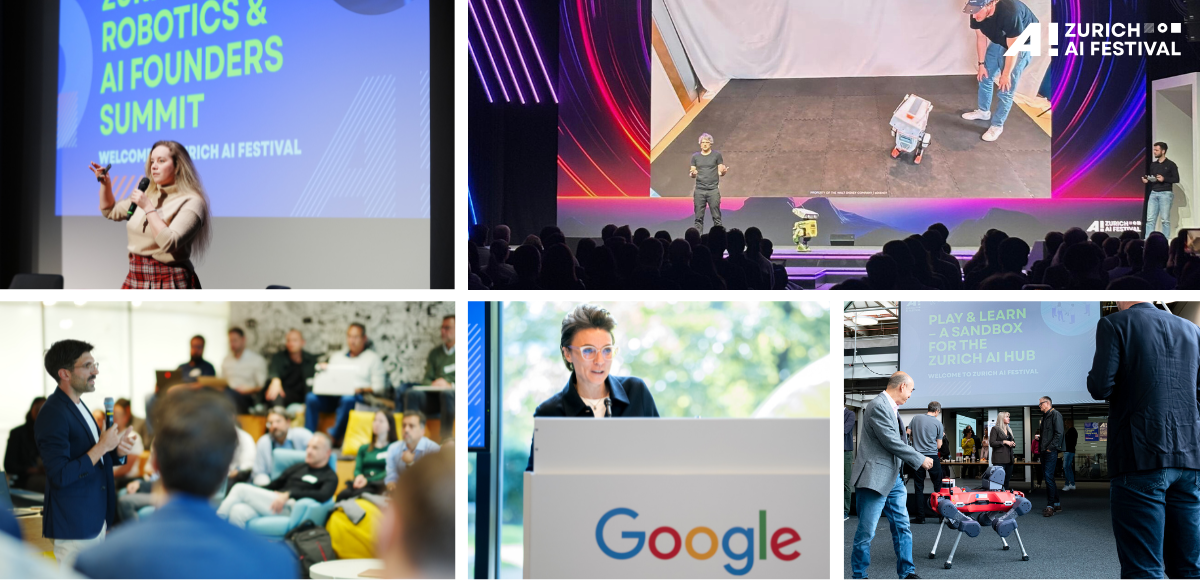
Learn more about the Zurich AI Festival
8. CAIF played an active role at the inaugural Zurich AI Festival (ZAIF). What themes did you explore and what kind of response did you receive?
At the inaugural Zurich AI Festival, CAIF led two sessions exploring AI, robotics, and artistic creativity:
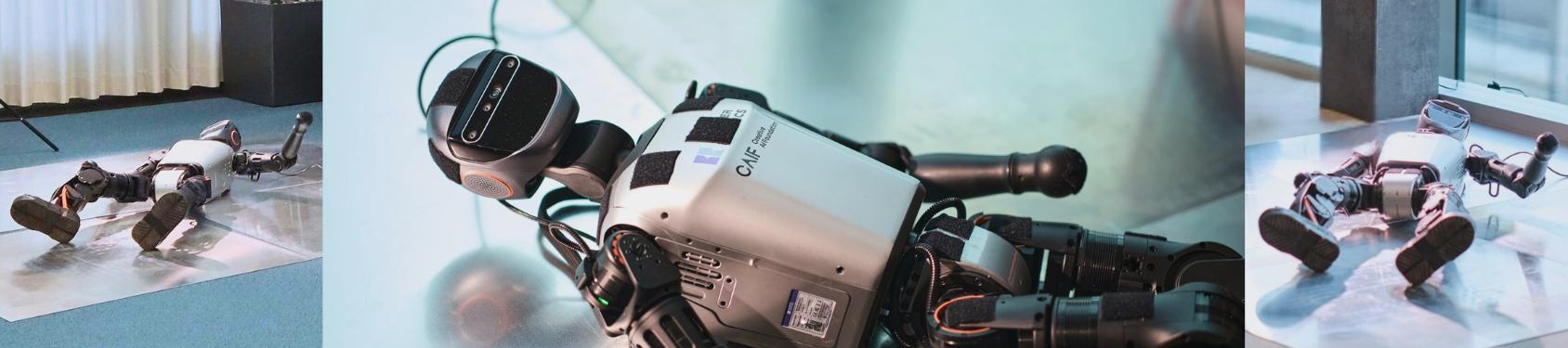
In The Awakening of Robotic Art, artists, technologists, and thinkers considered what happens when robots “dream.” AATB presented Training Ground, a poetic exploration of a sleeping robot, while experts such as Prof. Jianwei Zhang, Professor and Founding Director of the Institute of Technical Aspects of Multimodal Systems (TAMS) at the University of Hamburg, and Yariv Adan, General Partner at Ellipsis Venture Capital and former Senior Director of Product Management at Google, discussed humanoid robotics and AI as creative partners.
In Code in Motion – Robotic Art Performance, AATB showcased a humanoid robot subtly stirring as if dreaming, inviting reflections on AI’s capacity for introspection and poetic expression. The sessions drew an international audience and sparked lively discussions that extended beyond the festival.
Several participants reached out afterward with collaboration ideas, demonstrating how the Zurich AI community is fostering curiosity, dialogue, and concrete action at the intersection of art and technology.
9. Interdisciplinary collaboration seems core to CAIF’s approach. What kinds of partnerships are you building and why do they matter?
Much of our work at the Creative AI Foundation thrives on interdisciplinary collaboration, bringing together academia, the arts, technology, and policy to spark new ideas at the intersection of creativity and innovation. At the Zurich AI Festival 2025, we hosted sessions that united artists, technologists, and researchers to explore how AI is reshaping creative practice and human expression - demonstrating how quickly insights emerge when disciplines meet.
We also facilitated policy dialogue by connecting Professor Ling Hu of Peking University Law School with the Global AI Policy Summit in Zurich. In November, we partnered with the Chinese Business Network of Greater Zurich to link the Chinese and Swiss robotics ecosystems (AI crossroads: East meets West in robotics innovation), featuring live demos from leading robotics companies and highlighting global advances in the field.
Through these initiatives, we are building a vibrant community that brings together university talent, global tech professionals, and the local art scene. These partnerships matter because they create the conditions for experimentation and fresh thinking that no single discipline can achieve alone.
What’s next: Creative AI's bold roadmap in Greater Zurich
In the coming months, CAIF will expand its programming, deepen its partnerships, and launch new initiatives that explore the cultural impact of AI – from philosophy salons to robotics events on the global stage.
10. Looking ahead, how do you see the Foundation’s role evolving within the Greater Zurich AI ecosystem over the next 12–24 months?
Over the next 12–24 months, the Creative AI Foundation aims to deepen its role within the Greater Zurich AI ecosystem. We are already part of the Public Organizations, Regulation & Platforms network of the Greater Zurich Area and will continue building collaborations there. We are also registered with Innovation Zurich, a key platform for the tech and AI ecosystem in the Canton of Zurich, which allows us to connect with local innovators, institutions, and industry leaders.
Looking ahead, we plan to participate in the Zurich AI Festival 2026, develop partnerships with international organizations such as Women in Robotics, and prepare future initiatives, including the International Humanoid Robotics Ski Championship in the Alps, planned for 2027. We also aim to launch a philosophy club to explore how AI transforms humanity and culture, providing a space to raise critical questions about ethics, jobs, and social impact while building a larger, more interconnected community.
On a personal note, we are very grateful to the main organizers of the Zurich AI Festival, Valeria Bella (ETH AI Center) and Sabine Müller (Greater Zurich Area), for their guidance, support, and inspiration.

From robot performances to policy summits, the Creative AI Foundation is proving that the most impactful innovation happens between disciplines — not within silos. In Greater Zurich, CAIF has found the right blend of trust, talent, and traction to ask bold questions and build lasting impact.








Frequently Asked Questions
Business environment
What are the corporate tax rates in the Greater Zurich Area?
Corporate tax rates in Greater Zurich range from 12% to 24%, depending on the canton and municipality. Switzerland’s decentralized structure allows for regional tax autonomy.
Why should international tech companies consider expanding to the Greater Zurich Area?
The Greater Zurich Area offers economic and political stability, access to the European market, a highly qualified workforce, pragmatic regulations, and a competitive tax system. Further, the region is a global hub for innovation with world-class infrastructure, making it an ideal destination to grow business internationally.
Find out more about Greater Zurich as a leading location for expanding companies.
Meet with an expansion expert
Is Greater Zurich on your expansion radar? We support you on every step of your expansion journey - from location evaluation to fact finding visits.
Our services are free of charge and include:
- Introduction to key contacts in industry, academia, and government
- Location evaluation support to find the ideal base for your business
- Advice on regulatory framework, taxes, labor, market, and setting up a company
- Custom-made fact-finding visits, including office and co-working space
- And much more, customized to meet your needs.