
microagi, the European robotics deployment company founded in 2025 by former Formula 1 engineers, chose Greater Zurich in 2026 as the location of its global robotics and physical AI research & development headquarters. From its office on Bahnhofstrasse, next to ETH Zurich, the team develops the research behind Atlas, the data and deployment platform that helps industrial companies put robots to work reliably in production. Backed by a $55 million seed round - the largest a German company has raised - microagi recruits from ETH Zurich, DeepMind and Apple, underlining Greater Zurich's position as a key location for next-generation robotics and physical AI.
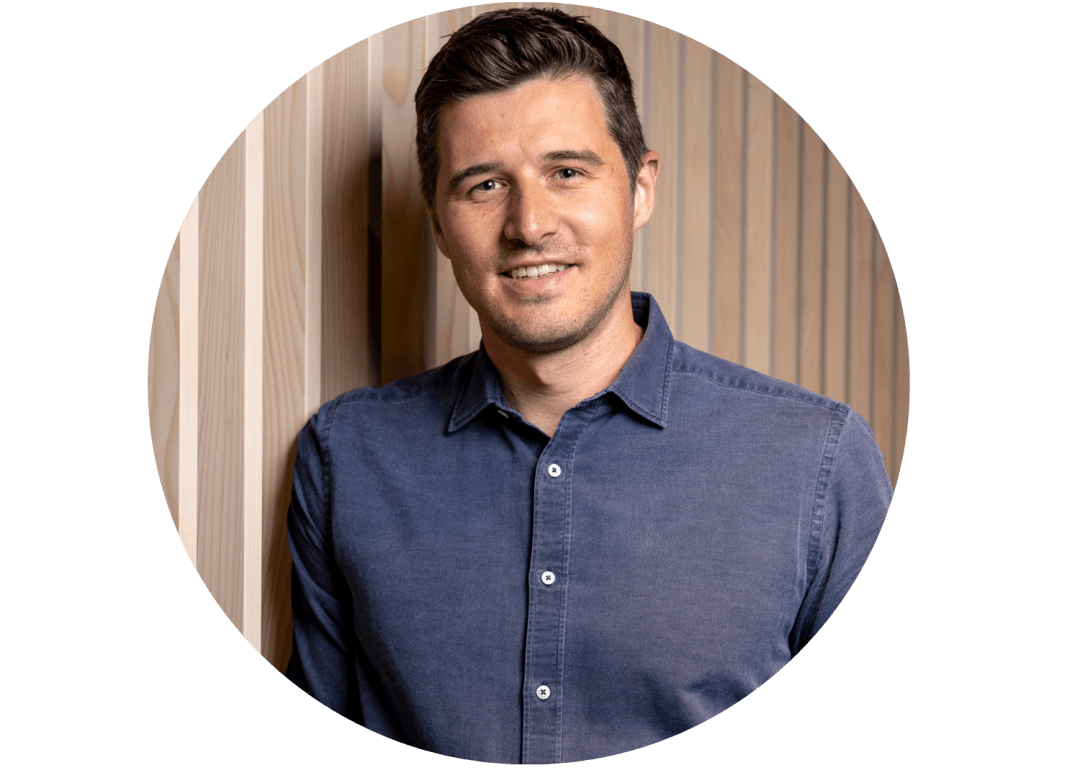
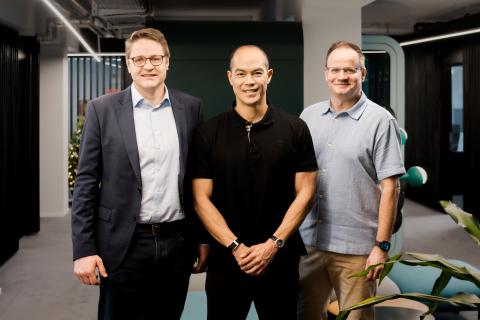
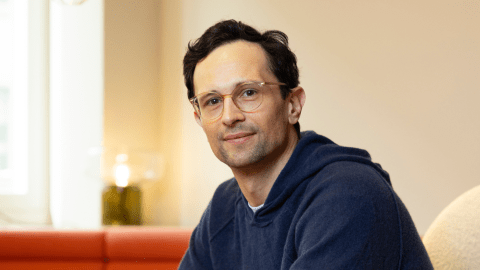
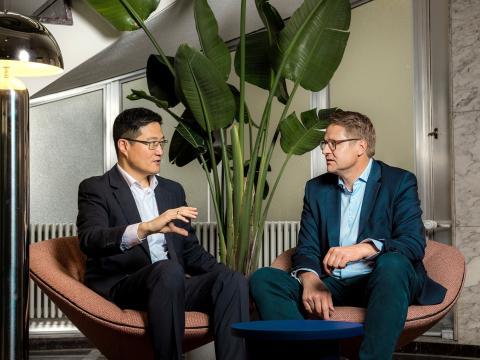
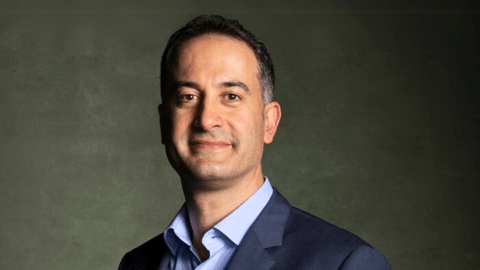
We spoke with Bercan Kilic, Co-Founder & CEO, and Nico Nussbaum, CTO, about the strategic decision to establish microagi's global robotics research & development headquarters in the Greater Zurich Area, the company's vision for Physical AI, and the future of industrial robotics in Europe.

Formula 1 to Physical AI
1. What inspired you to found microagi? What problem are you solving?
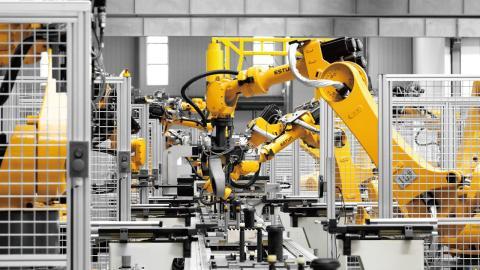
microagi is a European robotics deployment company. We started it in 2025 because Europe built the modern industrial world and is now at risk of losing it. Its factories run below where they were a decade ago. The workforce that made them good is retiring faster than it can be replaced. Europe will not win the next round on wages or energy costs. That leaves automation: getting robots to do real work inside real factories.
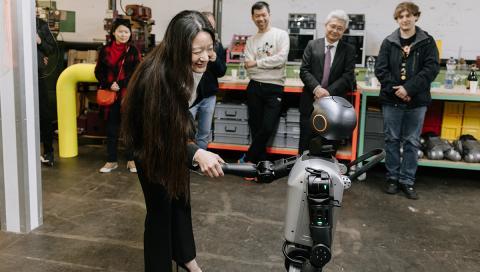
We build a robotics deployment platform called Atlas. Its job is narrow and hard: taking robots from impressive demonstrations to reliable production systems that are still operating on the factory floor months later. Almost every industrial robotics project dies in that gap. That is the problem we work on.
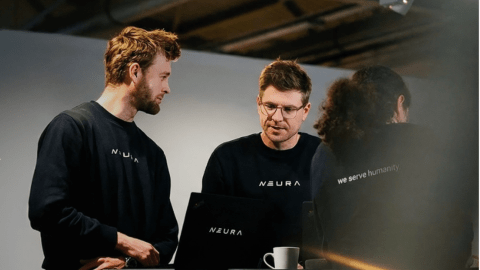
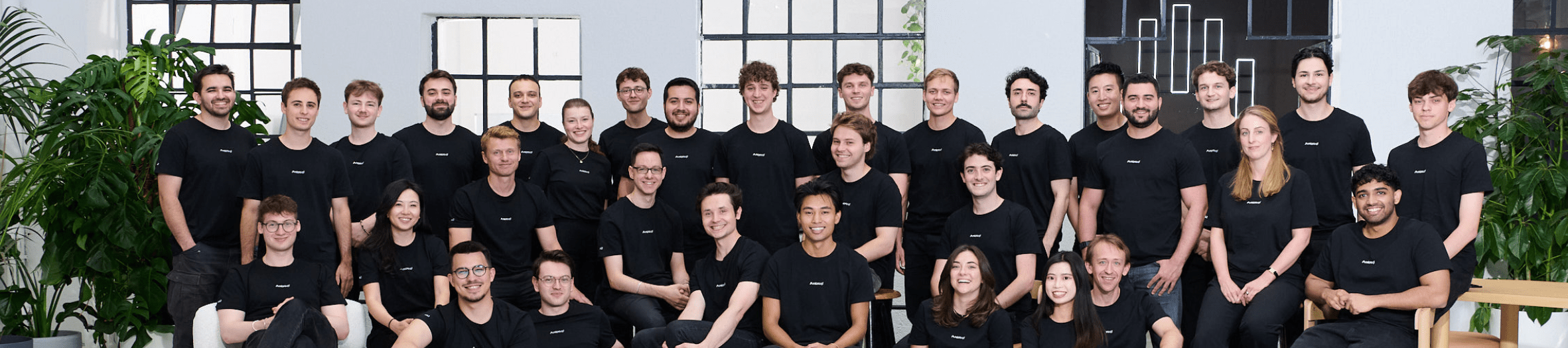
We are based in Munich, our global robotics research headquarters is in Greater Zurich, next to ETH Zurich, and we have smaller offices in London, Istanbul and New York. We raised a $55 million seed round led by Hummingbird, with Northzone, LocalGlobe, Village Global and redalpine. We believe it is the largest seed round a German company has raised. The team is unusual. Many of us come from Formula 1, physics and mathematics rather than the big technology companies, and we work forward-deployed on the factory floor with our customers, not at a distance.

2. microagi is a data research lab working on embodied physical AI, specifically end-to-end physical AGI. How is it going so far?
Robots and the models that drive them are becoming a commodity. A small number of very good companies build the best hardware and the best foundation models, and they reach everyone at about the same time. Data does not work that way. The record of how a specific plant runs stays specific to that plant. A robot gets to about 95 percent of a task from general training and then stalls. The last few percent decide whether it survives a real factory, and they come only from that factory's own data.
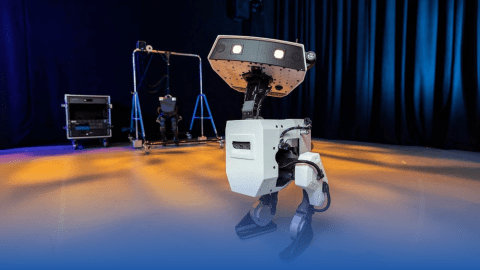
So we are a data research lab. Atlas captures physical work inside live production, turns it into training data, and tunes the best available model to that plant. We combine it with our own corpus, one of the largest bodies of physical work data there is. The research that makes this work, the post-training, the simulation, the fine-tuning runs out of Greater Zurich.
It is going faster than we expected. The usual path from first pilot to production is about five years. We are doing it in about eighteen months, and each deployment makes the next one quicker, because the data compounds. Europe holds two centuries of this data, locked inside its factories. Whoever turns it into working machines will hold the advantage in the next round of industrialisation.
Discover the Silicon Valley of Robotics
Discover the Silicon Valley of Robotics
Switzerland is known as the Silicon Valley of Robotics and the Greater Zurich Area contributes considerably to this peak position: Its universities and technology companies belong among the world’s leaders in autonomous & intelligent systems, computer vision, sensor technology, and artificial intelligence. Switzerland’s traditional strengths in mechanical engineering and precision goods contribute to this standing.

Rebuilding European manufacturing
Building a robotics company takes more than breakthrough technology. Talent, industrial partners and the right environment determine how quickly innovation reaches the factory floor.
3. The last few months must have been busy. What has been the biggest surprise or learning since you started operating microagi?
Two things surprised us.
The first is how ready European industry is. The story is that European manufacturers are slow and cautious. We have found the opposite. They see the demographic and cost pressures more clearly than anyone, and once you show them a robot that actually works, not a demo but a real deployment, they move fast. The demand has been larger and more urgent than we modelled.
The second is talent, and it comes back to Greater Zurich. We assumed hiring strong robotics and machine learning researchers would be our main constraint. Being next to ETH ended that worry almost immediately. The people we need are here, and they want to work on hard physical problems rather than another recommendation system.
4. Can you share one thing that has been easier than expected about this strategic move?
Setting up a research operation in the Greater Zurich Area was easier than we expected. We had braced for the usual friction of a new country: paperwork, slow hiring, being an outsider in a settled system. Most of it never showed up.
Hiring senior researchers is the clearest case. The talent around ETH and Greater Zurich's deep tech scene is dense enough that we rarely had to relocate people or talk them into moving. Most of them were already here. Some came to us. The place is also practical. It is built for technical companies, and the rules are clear, which matters when you are trying to move fast.
5. What is the one thing about the local environment that you are most excited to leverage?
Two things, and they reinforce each other.
The first is talent. ETH and the people around it produce the engineers and researchers we need, people at home between robotics, machine learning and hard physics. For a company whose whole advantage is what it does with physical data, that is close to everything.
The second is trust, and people underestimate it. Our product handles the most sensitive thing a manufacturer owns: how its plant actually runs. Switzerland's reputation for careful data governance, privacy and neutrality is not a soft benefit. It is a commercial asset. When we tell a customer their operational data sits inside a Swiss framework, with the privacy and on premise guarantees that come with it, that carries weight. That credibility would take years and a lot of money to build elsewhere.
The next chapter of Physical AI
With its research hub established, microagi is now focused on turning research into industrial deployment at scale.
6. If you had to name one local partnership within the tech ecosystem, which one would it be?
The relationship that matters most to us here is ETH. We put our research hub next to it on purpose, and the proximity shapes our hiring, our research, and the problems we take on.
The one we would want is a flagship Swiss industrial partner willing to run Atlas on their own floor. Switzerland's precision manufacturing is close to tailor-made for what we do. A first lighthouse deployment with a Swiss company, proving the eighteen-month path at home, is high on our list for the coming year.
7. Are you willing to share microagi's plans for the upcoming year?
Three things. First, grow the Zurich research team from ten people to hundred by the end of 2027. This is where the core of our data and model research sits, and we expect it to be one of the fastest-growing parts of the company. Second, put Atlas on more factory floors, and turn the current momentum into real reference deployments with serious European industrial companies. Each one feeds the corpus that makes the next deployment quicker. Each one also keeps a plant, and the jobs around it, in Europe. Third, keep our partnerships open. We stay agnostic about hardware and models, so the customer gets the right robot for the job.
Underneath all of it is one thing we want to show in public. A European company can take robots from pilot to production in eighteen months, not five years. If we do that, the question across European industry stops being whether to deploy robots and becomes how fast.
Press release: https://www.microagi.ai/articles/seed
Microagi's answer to "Why Zurich?": https://www.microagi.ai/articles/why-zurich
Facts & figures: microagi
- Industry/sector: Robotics, Embodied physical AI for industrial automation (robotics deployment)
- Founding year: 2025
- Headquarters
- Global HQ: Munich, Germany.
- Regional (Switzerland): Zurich (research hub, next to ETH).
- Further offices: London, Istanbul and New York.
- Employees (Switzerland): 10, growing to 100 by the end of 2027
- Employees (total, global): 40
- Functions in Greater Zurich: Robotics Research and Development Headquarters: core data and model research (post-training, simulation and model fine-tuning), located next to ETH Zurich

Thinking about expanding your business?
Thinking about expanding your business?
Let us connect you with the right person to learn more about how the Greater Zurich Area Ltd can support your business needs.
Our services are free of charge and include:
- Introductions to key contacts in industry, academia and government
- Advice on regulatory framework, taxes, labor market and setting up a company
- Custom-made fact-finding visits including office and co-working space