

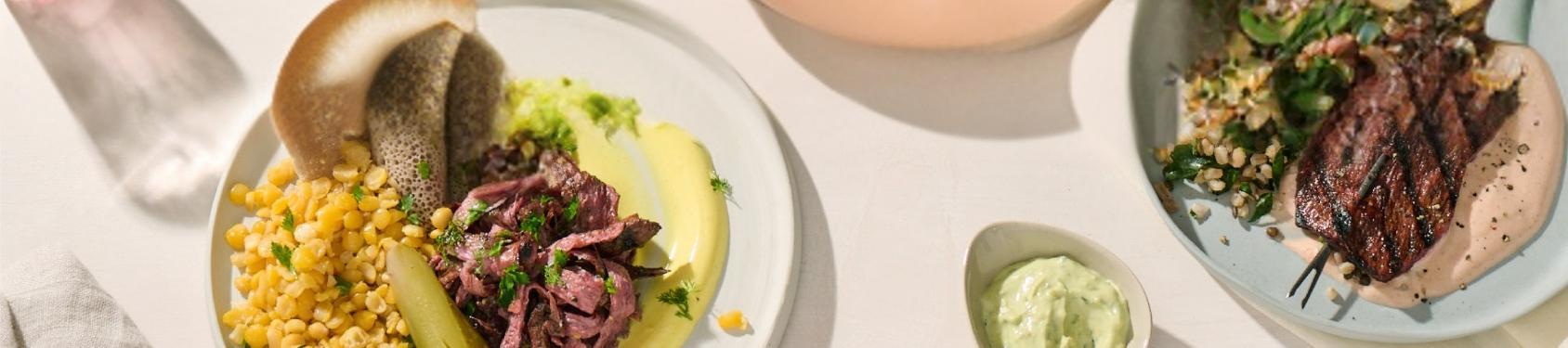
Israeli food-tech pioneer Aleph Farms has chosen the Greater Zurich Area as its European launchpad. With a new site in Kemptthal and key Swiss partners on board, the company is scaling up production of cultivated meat – a sustainable, animal-free alternative to conventional beef. This strategic move underscores the region’s strength in biotech, food innovation, and regulatory clarity. Here's how Greater Zurich supports the growth of a new industry that could redefine the future of food.
How a biotech pioneer is rethinking meat and why Zurich becomes the launchpad
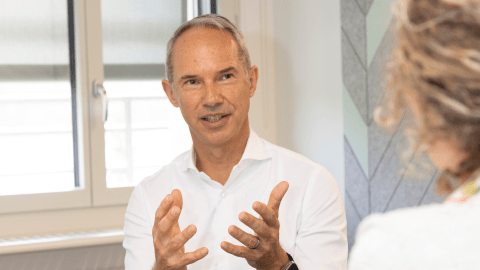
When Didier Toubia talks about the future of food, it does not sound like dogma. It sounds like a possibility. The cofounder and Chief Executive of Aleph Farms describes a new form of meat that is cultivated from animal cells and grown in a bioreactor. It looks and tastes like real meat, yet involves no slaughter. For some, this is a technological leap forward. For others, it still feels unfamiliar. But for Toubia, the direction is clear. “Kemptthal will be our starting point for further growth in Europe.”
The decision to choose the Greater Zurich Area is very deliberate. In August, Aleph Farms opened its first Swiss office in Kemptthal. The site is known as The Cultured Hub, and an ecosystem for cultivated meat is already emerging there. Givaudan, Migros Industry and Bühler have joined forces at this location and contribute expertise across the entire value chain. This makes Switzerland an ideal European launch market for a technology that is poised to transform the food industry. “Switzerland and the Canton of Zurich are a perfect base for us,” says Toubia. “The country is a leader in life sciences, in biotech and in the food industry. And it also has a diverse culinary scene with many top restaurants.”

From vision to pilot production in Kemptthal
Zurich is also experienced as highly accessible when it comes to regulation and administration. For an Israeli company working in the sensitive field of novel foods, close cooperation with authorities and established partners is essential. At the pilot site in Kemptthal, scientists and technicians are already refining production processes. Around twelve employees will initially set up the first production line. Current capacity lies between 10 and 100 kilograms per week. This is suitable for research and for preparing early market activities. But Toubia is thinking ahead. Over the coming years, Aleph Farms plans to expand its operations in Switzerland as production scales.
Economic impact and alignment with regional goals
This is where the Greater Zurich Area’s economic strength comes into play: according to an EY analysis, new companies help create skilled jobs, generate tax revenue, and energize the local network of suppliers, researchers, and customers. Aleph Farms brings exactly the profile that matches the region’s strategic priorities - laying the groundwork for the location to benefit strongly in the future.
FoodTech powerhouse Greater Zurich
FoodTech powerhouse Greater Zurich
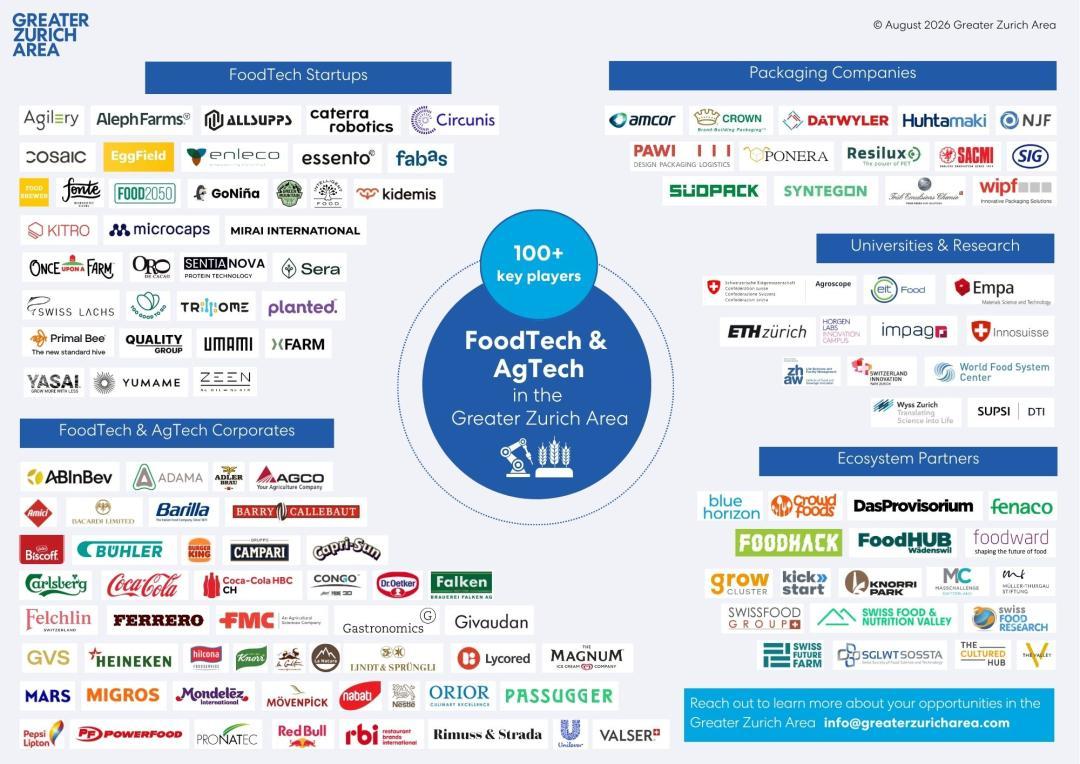
The Greater Zurich Area is an essential player in the FoodTech sector, actively shaping our global future. In the food industry worldwide, it's hard to find a product that the expertise and innovation of Swiss companies have yet to impact. Switzerland's achievements can be seen in various aspects, such as advanced technology, significant patents, and infrastructure.
From vision to pilot production in Kemptthal
Zurich is also experienced as highly accessible when it comes to regulation and administration. For an Israeli company working in the sensitive field of novel foods, close cooperation with authorities and established partners is essential. At the pilot site in Kemptthal, scientists and technicians are already refining production processes. Around twelve employees will initially set up the first production line. Current capacity lies between 10 and 100 kilograms per week. This is suitable for research and for preparing early market activities. But Toubia is thinking ahead. Over the coming years, Aleph Farms plans to expand its operations in Switzerland as production scales.
Economic impact and alignment with regional goals
This is where the Greater Zurich Area’s economic strength comes into play: according to an EY analysis, new companies help create skilled jobs, generate tax revenue, and energize the local network of suppliers, researchers, and customers. Aleph Farms brings exactly the profile that matches the region’s strategic priorities - laying the groundwork for the location to benefit strongly in the future.
Swiss partnerships shaping the market approach
It is not only the location that matters, but also the network of Swiss partners. Micarna Group as part of Migros Industry invested in Aleph Farms in 2019, together with international investors including the sovereign wealth funds of Singapore and of the United Arab Emirates. “Migros Industry has deep experience in food manufacturing and retail,” Toubia explains. “We plan to develop products together that are specifically tailored to the Swiss market.” This brings global biotech together with Swiss excellence in food production.
The remaining challenges are price and acceptance. The first regulatory approval has been granted in Israel, and the product has already been certified as kosher. In Switzerland, the regulatory process is underway, and Aleph Farms continues to work closely with partners and authorities to ensure compliance and readiness for market introduction.
Path to market and consumer readiness
While production costs continue to decrease, cultivated meat will debut in the premium segment, where craftsmanship, quality and innovation set the tone for adoption. The initial audience in Switzerland consists primarily of early adopters: flexitarians and omnivores who regularly dine in fine restaurants, value high-quality products and are curious to experience new food technologies that reflect their values of taste, sustainability and animal welfare.
And yes, cultivated meat still raises questions. A recent internal consumer survey conducted together with a Swiss industry partner indicates strong interest in trying cultivated meat among Swiss consumers, including a significant share who are extremely interested in tasting it.
Toubia remains confident. Attitudes change once people have the chance to experience something new for themselves. “Our goal is to offer a complement,” he says. Cultivated meat is not intended to replace all conventional meat, but to create something that has not been possible before: enjoyment without sacrifice.
This vision meets a region that does not simply manage transformation, but actively shapes it. For the Canton of Zurich, Aleph Farms is part of a strategy to diversify the regional economy and to promote sustainable growth. The idea that meat could become an export opportunity for Switzerland would have seemed unlikely only a few years ago. Today, it represents an investment in food security, animal welfare and climate protection.
Here, meat is no longer the end of an animal. It is the beginning of a new industry.
When a Petit Steak, as Aleph calls its premium product, will first be served in a top restaurant in Zurich is still an open question. But the future already has a place. Between Zurich and Winterthur, the next generation of food is growing in stainless steel. When Toubia describes what is happening there, it no longer sounds like science fiction. It sounds like the next logical step. Here, meat is no longer the end of an animal. It is the beginning of a new industry.











Frequently Asked Questions
联系我们
我们引导您顺利进入大苏黎世区的经济生态圈,为您提供宝贵的市场和行业信息,并协助企业连接同行、研究机构、孵化器、主管部门、专业服务提供商、协会和平台。
+41 44 254 59 59
info@greaterzuricharea.com